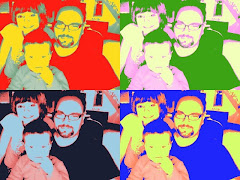
Coretta is finally enrolled in piano at Saint Joseph's School of Music. She really loves her new piano teacher and is learning a lot of great skills. In the video below, Coretta will describe her experience and end with a short performance.
Tuesday, March 18, 2008

Coloring Easter Eggs


Today was the day that Coretta and I decided to color Easter eggs. Coretta loves decorating and eating them!! She also can't wait to learn about the stations of the cross and as Coretta says, "When we can finally say Alleluia, Jesus is risen!" She doesn't mind the candy and the Easter bunny either! Here is a video of Coretta explaining how to decorate an Easter egg.
Monday, March 17, 2008
Art Adventures
This Thursday, I will be teaching Coretta's second grade class about art history. My lesson is centered around a painting from 1911 called Intrigue by James Ensor. At the beginning of the class, pass out a green star to only certain students and tell them to leave it on their desk until later.
Building Prior Knowledge:
Discussion Questions:
1) Do the people in this painting look real? Or do they represent types of people? Why do you think so? What types of people are they? Do you think Ensor likes them?
2) Have you ever wore a mask? Perhaps in play or on Halloween? Why did you wear it? How did you feel behind the mask?
3) What kinds of people might wear masks?
4) Sometimes we can make our own faces into masks. If you're sad, but don't want anyone to know, what kind of mask would you wear? If you are frightened, but want to seem brave, what kind of mask do you wear?
Ensor's style seems to hover between dream and reality. Rather than depicting things as they would actually appear, Ensor creates a sense of fantasy and caricature by his use of exaggerated color, line, and form. Painting in oil, on canvas, he uses bright red, blues, and greens juxtaposed with whites, browns, and blacks. He also uses broken brush strokes which move in various directions.
Art History:
In this painting, Ensor depicts the harassment of his sister, Mariette, and her Chinese fiance. Mariette's romance with Tan Hee Tseu, an art dealer who lived in Berlin, caused a great scandal in the town. In Ensor's painting, Mariette and Tan, the masked man and woman in the center, are the main characters. She holds his arm protectively, while he seems to withdraw his expressionless mask down into the color of his coat. The two are surrounded by grotesque gossips, dressed in carnival masks, who appear to mock them.
These masks are really a symbol for how cruel we can be to others. Here the masks seem to resemble cruel people, as ugly on spirit as the masks they wear. There seems to be a two-fold function of the mask: it can give protection to the vulnerable and disguise the vicious or mean people.
1) Have you ever been laughed at or had your feelings hurt in school? Did you like the faces of those who were teasing you? How did they look to you? Did you let them know you were hurt, or did you try to "mask" your feelings?
Once the second graders have looked at the piece and made comments, we will then compare this painting to Dr. Seuss's book, The Sneetches. Below is a video of it:
Here is part 2:
First, have them define the terms discrimination and privilege. Have them create a list of school privileges that they have such as being first in the line, receiving homework passes, extra center time, etc. Explain that those who received the green stars will receive these privileges and those who did not won't. Have them share with the class how they felt about receiving or not receiving a star? We will then read Dr Seuss's book called The Sneetches. In the story, the sneetches are yellow bird-like creatures where some where green stars, and others do not. These stars become a sign or symbol of discrimination and privilege. Once they read this story, I will ask them how it would feel to be treated differently if you didn't have a green star? Do we sometimes do this with our relationships with others? How do you think the main character in the painting by Ensor felt when he was not being included? Have we ever not included someone at recess, at the lunch table? These are signs of discrimination as well. How can we work towards including all people here at Saint Thomas More?
Art Project:
They then will spend time creating a mask that can either be a portrayal of the vicious (mean people) or more protecting the vulnerable like in the case of Mariette and Tan. If time, they will share their creations with the class.
Building Prior Knowledge:
Discussion Questions:
1) Do the people in this painting look real? Or do they represent types of people? Why do you think so? What types of people are they? Do you think Ensor likes them?
2) Have you ever wore a mask? Perhaps in play or on Halloween? Why did you wear it? How did you feel behind the mask?
3) What kinds of people might wear masks?
4) Sometimes we can make our own faces into masks. If you're sad, but don't want anyone to know, what kind of mask would you wear? If you are frightened, but want to seem brave, what kind of mask do you wear?
Ensor's style seems to hover between dream and reality. Rather than depicting things as they would actually appear, Ensor creates a sense of fantasy and caricature by his use of exaggerated color, line, and form. Painting in oil, on canvas, he uses bright red, blues, and greens juxtaposed with whites, browns, and blacks. He also uses broken brush strokes which move in various directions.
Art History:
In this painting, Ensor depicts the harassment of his sister, Mariette, and her Chinese fiance. Mariette's romance with Tan Hee Tseu, an art dealer who lived in Berlin, caused a great scandal in the town. In Ensor's painting, Mariette and Tan, the masked man and woman in the center, are the main characters. She holds his arm protectively, while he seems to withdraw his expressionless mask down into the color of his coat. The two are surrounded by grotesque gossips, dressed in carnival masks, who appear to mock them.
These masks are really a symbol for how cruel we can be to others. Here the masks seem to resemble cruel people, as ugly on spirit as the masks they wear. There seems to be a two-fold function of the mask: it can give protection to the vulnerable and disguise the vicious or mean people.
1) Have you ever been laughed at or had your feelings hurt in school? Did you like the faces of those who were teasing you? How did they look to you? Did you let them know you were hurt, or did you try to "mask" your feelings?
Once the second graders have looked at the piece and made comments, we will then compare this painting to Dr. Seuss's book, The Sneetches. Below is a video of it:
Here is part 2:
First, have them define the terms discrimination and privilege. Have them create a list of school privileges that they have such as being first in the line, receiving homework passes, extra center time, etc. Explain that those who received the green stars will receive these privileges and those who did not won't. Have them share with the class how they felt about receiving or not receiving a star? We will then read Dr Seuss's book called The Sneetches. In the story, the sneetches are yellow bird-like creatures where some where green stars, and others do not. These stars become a sign or symbol of discrimination and privilege. Once they read this story, I will ask them how it would feel to be treated differently if you didn't have a green star? Do we sometimes do this with our relationships with others? How do you think the main character in the painting by Ensor felt when he was not being included? Have we ever not included someone at recess, at the lunch table? These are signs of discrimination as well. How can we work towards including all people here at Saint Thomas More?
Art Project:
They then will spend time creating a mask that can either be a portrayal of the vicious (mean people) or more protecting the vulnerable like in the case of Mariette and Tan. If time, they will share their creations with the class.
Saint Patrick's Day


In honor of Saint Patrick's Day Coretta was able to be out of uniform at school!! She was very excited about it. She decided to wear a green sun dress with a light green sweater. She looked very cute!
Sunday, March 16, 2008
Bad Habits Start Early...


The other day while Grandpa was babysitting Geno, he realized that Geno really liked pop. Not only did he like pop, but he also liked coffee. Now if any of us are sitting in the living room with a caffeinated beverage, Geno will come over to you and grunt, yell, and try to pull it out of your hands. Here is a photo of Geno taking a swig of Dad's coke.
Friday, March 14, 2008
Little pinchers


Geno has just mastered the art of pinching his mother, father, and sister. For some reason, when he sees skin, he needs to pinch it. It has become an obsession of his and he will NOT stand for the word No! I hope this is a short filled stage and we will move on to some other obsession.
He also is impatient when it comes to shopping. He is good until right as we get to the check-out. Then it seems that he feels it is his time to shine. Shining by throwing things out of the cart and trying to eat food such as bananas with the peeling on. Here are some recent photos. One was during nap time today. Don't let this angelic pose fool you!
Deep Thoughts by Coretta
The other day, Coretta was sitting in her chair writing one of her songs, when she stopped and asked her Dad, "Can I read my song to you?" which he replied, "Of course." Afterwards she asked, "Are any of these lyrics all rights reserved?" How cute is that!! Already worrying about copyright infringement!
Subscribe to:
Posts (Atom)


 © 2008 Jonathan Feinberg